CookBook Template for Canva: A Designer's Guide to Recipe Book Creation
Staring at a pile of cherished family recipes or a meticulously curated collection of your own culinary creations is a common scenario for food bloggers, chefs, and hobbyists alike. The challenge isn't the food—it's the format. How do you transform that stack of index cards or digital notes into a tangible, beautiful cookbook? For many, the answer lies in a structured, professional CookBook Template for Canva. This isn't just a set of pre-made pages; it's a foundational design asset that bridges the gap between personal passion and polished publication.
Understanding the Template's Core Design and Utility
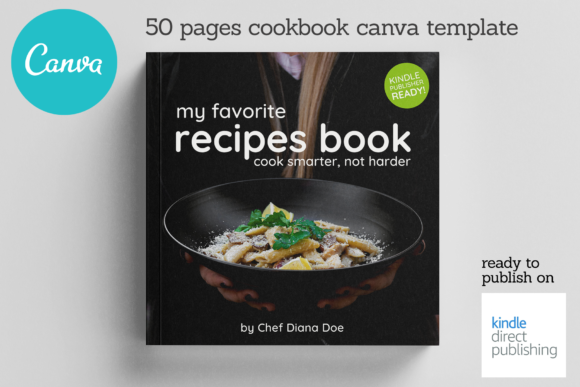
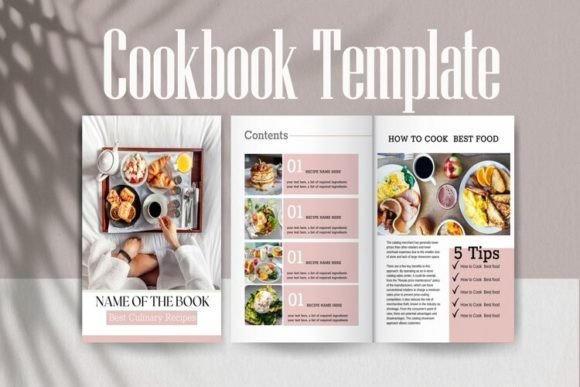
At its heart, the CookBook Template for Canva is built for practicality and visual appeal. Sized for US Letter (8.5" by 11"), it's ready for both digital distribution as an ebook and high-quality print. The template package includes 10 essential ebook page templates: two distinct cover options, content pages, dedicated recipe layouts, an "about the author" section, and a contacts page. This structure provides a logical flow, guiding the reader from the inviting cover through your story and into the heart of the cookbook—the recipes themselves.
The visual personality of the template is intentionally versatile. It likely employs a clean, modern typography foundation, balancing serif fonts for body text readability with sans serif or subtle script fonts for headings and decorative elements. This approach to font pairing is a hallmark of effective editorial design, ensuring that the recipes are easy to read while the overall aesthetic feels curated and professional. The layout prioritizes clarity, with ample white space and structured grids for ingredients and instructions, making it a genuine tool for modern typography in action.
Practical Applications: From Personal Project to Professional Asset
The true value of this CookBook Template for Canva emerges in its wide range of applications. For the family archivist, it's a way to preserve heritage in a format that can be printed for every cousin and saved as a digital heirloom. For the food blogger or small business owner, it's a rapid path to creating a lead magnet, a product for sale, or a portfolio piece that elevates their brand identity. The template's adaptability makes it a cornerstone design asset for content creators looking to expand into the tangible product space.
Its utility extends beyond traditional cookbooks. The structured layouts are perfect for any project requiring a blend of imagery, descriptive text, and structured information. Consider using it for a meal planning guide, a workshop manual for a culinary class, or even a product catalog for a gourmet food business. The ability to completely customize all text, fonts, and photos means the template's visual style can be shifted to match any brand, from rustic farmhouse to sleek and modern, making it a versatile component in your packaging design or marketing toolkit.
Customization and Making the Template Your Own
The power of this template lies in its deep customization within Canva. You are not locked into a single aesthetic. You can change every font, swap every color, and replace every image placeholder with your own photography. This level of control is crucial for creating a brand identity that feels authentic. If your brand uses a specific premium font, you can upload it to Canva and apply it throughout the template for instant consistency across all your social media graphics and printed materials.
The template's page management features are equally important. You can add, copy, delete, or rearrange pages with ease. This means if you have 50 recipes instead of ten, you can duplicate the recipe template page 40 times. If you don't need two "about the author" pages, delete one. This flexibility transforms the template from a static document into a dynamic framework for your project. When evaluating the template for a specific project, always consider: Does the default font pairing suit my content's tone? Is there enough visual hierarchy to guide a reader's eye? Testing a few pages with your own content is the best way to assess fit.
Final Considerations for a Polished Outcome
Before you dive in, a few practical considerations will ensure a smooth process. First, think about your final output. While designed as an ebook template, the US Letter size is print-ready. If you plan to use a print-on-demand service, check their specific bleed and margin requirements and adjust the template's frames accordingly in Canva. Second, the template is a starting point for your visual hierarchy. Use the heading styles consistently to create a rhythm that readers can follow intuitively, enhancing both readability and engagement.
Finally, remember that this is a commercial font and design asset. Always review the licensing included with your purchase, especially if you plan to sell the final cookbook as a commercial product. The CookBook Template for Canva provides the professional skeleton, but your recipes, stories, and photographs give it a soul. It’s a tool designed to save you hours of layout work, allowing you to focus on what you do best: creating and sharing wonderful food.