Editable Dog Training Log Template 3: Track Commands & Progress
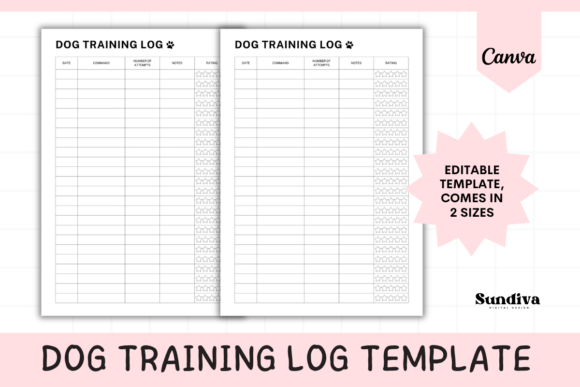
Effective training is a project, and like any creative endeavor, it requires structure to measure success. The Editable Dog Training Log Template 3 brings a level of organization to dog training that is often missing from casual home sessions. It is not just a list; it is a visual system designed to track the progression of obedience commands, from the first chaotic "sit" to a reliable, five-star recall. For the modern dog owner or professional trainer, this log offers a blend of practical data entry and visual clarity that turns daily practice into tangible results.
Designing for Clarity: The Visual Appeal of the Training Log
The visual style of this template prioritizes legibility and hierarchy, which are fundamental principles in both typography and data management. It is not a cluttered spreadsheet. Instead, it uses a clean, grid-based layout that makes it easy to scan and update. The inclusion of a 5-star rating system is a particularly strong design choice. It functions much like a well-designed icon set in a brand identity—providing instant, at-a-glance feedback without requiring the reader to parse dense notes. This star rating becomes a powerful visual marker, allowing you to quickly spot which commands need more practice. The overall aesthetic is approachable and organized, avoiding the sterile feel of a corporate form in favor of a practical tool that feels good to use.
This template is delivered as a premium font of sorts for your training regimen—it is a polished, ready-to-use asset. The included design assets are a PDF for immediate printing and an editable Canva template. The Canva template is where the real value lies for those who enjoy a bit of customization. You can adjust colors, move elements, and truly make the log a part of your personal system. This flexibility is a hallmark of good modern typography and layout design; it gives the user control while maintaining a strong, consistent structure. The template fits 24 entries per page, a density that balances detail with readability, much like a well-set text column in editorial design.
Practical Applications: From Home Training to Professional Management
Where does this template truly shine? Its strength is in its versatility, a quality you look for in any great typeface or design asset. For the dedicated dog owner doing structured puppy training at home, it becomes a daily journal. You can log a session on "Stay," note the number of attempts, jot down distractions, and assign a star rating. Over weeks, the log tells a story of progress, much like a brand's visual identity evolves to show growth. It helps you see patterns—are mornings better than evenings? Does performance drop after a walk? This data-driven approach is something any entrepreneur or marketer can appreciate.
For professional trainers managing multiple dogs, the log is an essential tool for brand consistency and client communication. It allows you to track each dog's unique journey with precision. You can create a page for "Client A - Bella" and another for "Client B - Max," maintaining a clear record for each. This level of organization projects professionalism and builds trust, similar to how a carefully chosen sans serif font in a logo design conveys clarity and reliability. The template can even be adapted for commercial projects—imagine a dog walking service using a customized version to report back to clients on their pup's behavior during walks.
Integrating the Log into Your Creative Workflow
Think of this log as a piece of your broader creative toolkit. It is a creative font for your data, a way to present information beautifully and functionally. When you are evaluating any design asset, from a script font to a serif font, you consider its fit. This template fits any project where structured tracking is needed. Its clean lines and ample space for notes make it suitable for print design—you can print a stack and keep them on a clipboard. It also works digitally; the Canva template can be filled out on a tablet during a training session in the park.
The real-world value here is immense. It removes the guesswork from training. Instead of thinking, "I think we practiced this," you have a record. You can review included styles of training by looking back at your notes. Did using a high-value treat improve the star rating for "Down"? The log helps you test font pairings of techniques, so to speak. You are not just hoping for improvement; you are measuring it. This is the kind of practical, actionable tool that resonates with a creative audience—designers, bloggers, and small business owners who understand that good systems lead to better outcomes.
Ultimately, the Editable Dog Training Log Template 3 is more than a printable PDF. It is a framework for success. It applies the principles of good design—clarity, hierarchy, and usability—to the rewarding challenge of dog training. By tracking commands, attempts, and performance with this system, you are not just training a dog; you are building a record of your shared progress, one well-documented session at a time.